Information
- Location
- Karaganda Region, Shet District
- Period
- 17001 – 1990
- Type
- Mausoleum
- Kind
- Buildings of monumental art
Sources
- Қазақстанның киелі орындарының географиясы: Табиғат, археология, этнография және діни сәулет өнері нысандарының тізілімі / Жалпы редакциясын басқарған ҚР ҰҒА академигі Байтанаев Б.Ә. – Алматы: Ә.Х. Марғұлан атындағы Археология институты, 2017. – 1-шығарылым. – 904 б.
Description
The monument is located 15 km north of Aksu-Ayuly village, on the left bank of Sherubainura river (Shet district, Karagandy region).
Zhidebai Batyr Kozhanazaruly is an outstanding historical figure. Being one of the prominent organizers and leaders of the people's militia, he made a great contribution to the struggle against dzungars in the XVIII century, was an associate of Abylai Khan. Heroic deeds of Zhidebai Batyr are well known for many legends, which are passed down from generation to generation. During the reign of Abylai he was the leader of his people. He was one of the most revered warriors in the struggle for the lands of Saryarka. Batyr's words were very popular, people listened to his advice. In folklore Zhidebai Batyr was a hero, orator, witty, intelligent man with deep thinking.
Mashkhur-Zhusup Kopeyuly, describing Zhidebai Batyr in the cycle of legends about Kazakh Batyrs, attributes to him mythical features, expressed in the endowment of a historical person with supernatural abilities: "Alteke-Sarym Zhidebai Batyr was a famous Batyr of Abylai Khan, who at that time was a khan of all three Kazakh zhuzes. He could make a transition on the moonless darkest night, orienting himself as if on a clear day". It was believed that he could very easily find the thing lost in the steppe, even at night. According to legend, he was accompanied by two invisible red foxes, the guardian spirits. The expression "Kos tulkili Zhidebai" (Zhidebai, which has two foxes) has been preserved.
Zhidebai Batyr comes from a family where the fight against dzungars for independence was betrayed from father to son. Zhidebai's grandfather Dos Batyr and father Kozhanazar Batyr also distinguished themselves in the fight against dzungars and bore the title of Batyr. According to legend, once Dos Batyr with his son Kozhanazar Batyr were captured. At the general council dzungars decided to release only one of the Batyrs. At that moment Dos Batyr half whispered in the form of a kui to convince his son Kozhanazar Batyr to go to his native nomads. In folk memory this kui was preserved as "Sybyr-sybyr kui". The grave of Dos Batyr is located near the river Byzhy/Bizhe in Kerbulak or Koksu districts of Almaty region (informant A. Musatayuly, born in 1927, recorded in 2007 by A.Z. Beisenov). Dos Batyr, his son Kozhanazar Batyr and grandson Zhidebai Batyr contributed greatly to the national liberation war against dzungars. They actively participated in exile of Dzungarian armies from Balkhash region, Zhetysu, Alakol, Shyngystau, Tarbagatai. Possibly, Dos Batyr participated in the militia of Malaysary Batyr, with whose name the mountain range in the Kerbulak district of Almaty region is connected.
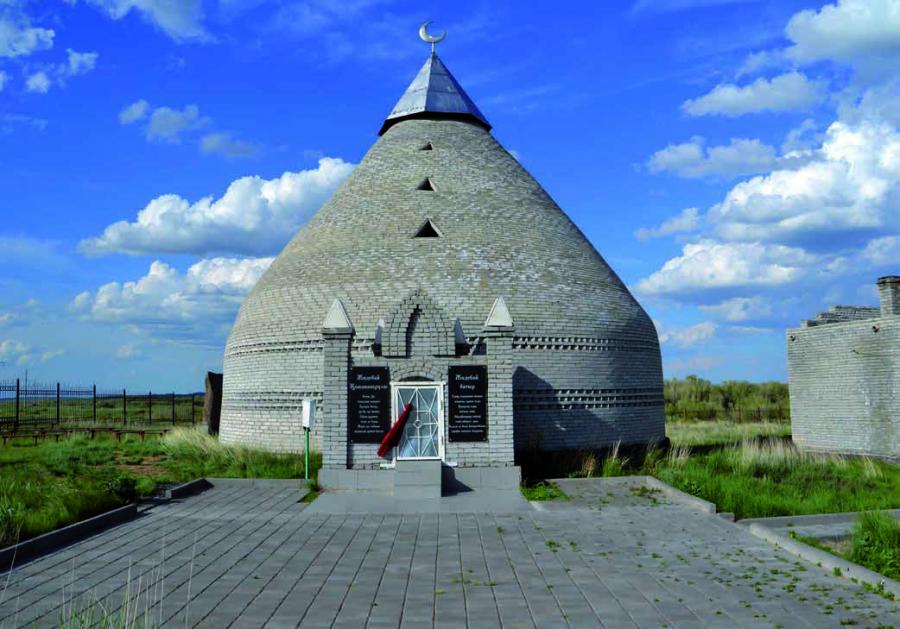
The expression: "Where else is there such a land as Saryarka and such a Batyr as Zhidebai? (Saryarkadai zher kaida, Zhidebaidai er kaida) was preserved. Once, Abylai Khan sent a 60-year old Zhidebai Batyr on a campaign against a ruler named Karakozha. Lake Balkhash has a stone pass called Uzynaral, which divides the lake into two parts. Once upon a time there was a branch of the caravan track along this pass. Zhidebai together with his people crossed the lake through the forgotten pass for almost three centuries and moved to the other side. Thus, the sudden attack of Zhidebai's army brought victory, and the result was the capture of the enemy's nomad camps. Then Karakozha learned that this route was known only to Zhidebai, cursed him to lose the eyes with the help of which he found the crossing - and Batyr became blind. At the age of 90, Zhidebai said his 100th birthday was a favor to be repaid thanks to six Alashes, and his blinded eyes were the curse of Karakozha. Data on Karakozha and his possessions are not specified, it is possible that there may be a connection with the Abylai Khan campaign against the Kyrgyz. The Mausoleum of Zhidebai, renovated in the 1990s, is made of standard white bricks in a circular shape and then rises to the dome. At the very top of the dome there is an iron crescent. At the entrance there are two small towers and two black stone tiles. Next to the mazar there is a house for visitors, in the summer season there is a caretaker. Kazakh graves and the house of shyrakshy are also located in the vicinity of the mausoleum. The monument is an object of tourism and pilgrimage.