Information
- Location
- Түркістан облысы
- Period
- 100 BCE – 777
- Type
- Temple
- Kind
- Archaeological sites
- Authors
- Смагулов Ерболат Акижанович
Sources
- Қазақстанның киелі орындарының географиясы: Табиғат, археология, этнография және діни сәулет өнері нысандарының тізілімі / Жалпы редакциясын басқарған ҚР ҰҒА академигі Байтанаев Б.Ә. – Алматы: Ә.Х. Марғұлан атындағы Археология институты, 2017. – 1-шығарылым. – 904 б.
Description
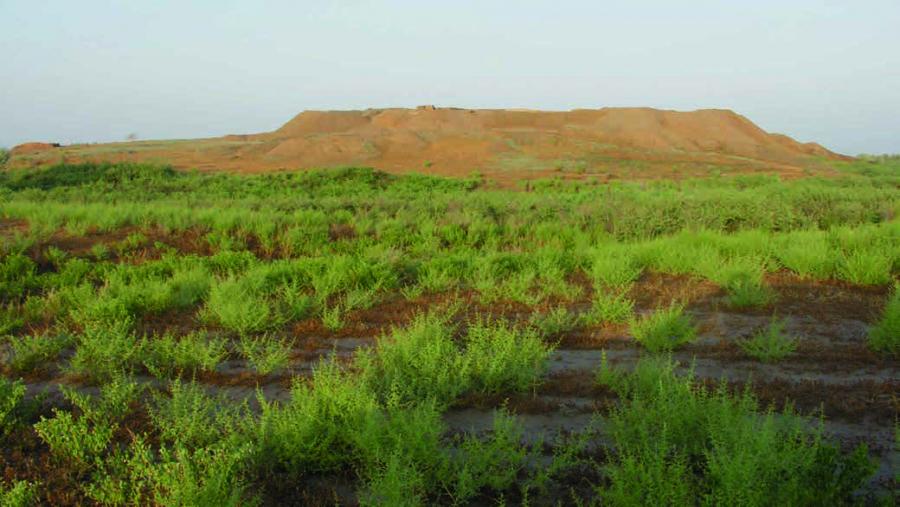
The monument is located 18 km west of Turkestan - along the international highway among bakhchas and cotton fields there is a small yellow hill of Sidak hillfort. As usual, the local aksakals have their own legends and tales around it.
The sacral essence of the monument is that, as archaeological materials show, in the early medieval era and in late antiquity, the fortress was a temple of ancestors for the influential late Sarmatian clan. Later, during the triumph of Islam, a famous Sufi preacher, missionary and spreader of Islam was buried there. He is recognized as a contemporary of Khoja Ahmed Yasawi and, perhaps, equal to him in his merits before Islam. By the way, the name Sidak ata/Seidak ata is, in fact, a distortion of the name Shaydai-sheikh. And such a stratigraphy - the burial of an Islamic protagonist in the middle of the ruins of a pagan sanctuary - looks quite symbolic. It is as if symbolizing the victory of the new ideology brought to these lands on the next wave of globalization. A modest mausoleum above his grave on the lower site of the hillfort has long been completely destroyed. But its ruins remain attractive to the local Kazakh population.
The main hill with its quadrangular shape and rounded corners is 340×180 m in size. The length of the axis is oriented in the direction of NE-SW. The average height of the site is 7 m. In the central part of the site there is a powerful hill of a fortified "citadel" with a total height of about 14 m. Such monuments are usually called "Tobe with a platform", meaning the main highest massive hill. Underneath it there are ruins of a fundamental building like a castle and a lower "platform" with the remains of all kinds of "service" buildings or dwellings of the population dependent on the cartridge that lived in the "castle". Approximately such are the scientific ideas about the social essence of such monuments, which enliven the historical landscape of Southern Kazakhstan.
In 2004 researches of the given monument have been included in the State program "Cultural heritage" and have led to opening of the unique complex of the archaeological materials comprehensively characterizing culture and ideology of the population of Southern Kazakhstan during V-VIII centuries.
At the Sidak Citadel on the level of the upper construction horizon was opened a complex of cult buildings (sanctuaries) and a site of residential development (VII-VIII centuries). It is established that the life here has been interrupted after the total fire which has covered cult constructions and adjoining dwellings of inhabitants. According to the various coins found, the fire layer dates back to the first half of the VIII century, and the fire itself can be associated with the invasion of Arab-Muslim troops in the Syr Darya region in the 20-40s of the VIII century. Of the defined coins should be mentioned bronze anepigraphic coin with the image of a lion and tamga, dated to the first half of the VIII century. Similar to the type of coins - quite frequent finds in the Otrar and known in the Turkestan oases.
The resulting complex of various artifacts characterizes many aspects of culture and ideology of the population of Kazakhstan. It turns out that the layout and structure of the sanctuaries discovered in Sidak, finds analogies with a wide range of monuments located in the Syr Darya region and have been spread since the IV century in Sogd and other historical and cultural areas of Central Asia. The problem of the definition of religion, to which these sanctuaries are connected, is still debatable in science.
Deepening under the level of the upper horizons at the Sidak citadel led to the opening of a trapezoidal in terms of a cult courtyard of about 1,000 m2, fenced off from the rest of the citadel by powerful (up to 3 m thick) raw-pachs walls. These walls have survived up to 4 meters in height. It is established that the yard belongs to an earlier chronological period and can be dated to the IV-VI centuries. In the yard there is a number of rooms, in which once stood large ceramic vessels (hums). In some cases, the bones of human skeletons were found in their wreckage. These and other findings suggest that the monumental cult courtyard served as a place of worship for ancestral spirits, as well as a place of storage of their remains (skeletons) in the denominations.
Excavations below the lying construction horizons (in the structure of the cultural layer of Sidak revealed six such layers, corresponding to certain historical periods up to the first centuries B.C.) are associated with high labor costs, because older periods are hidden under the powerful later layers.