Information
- Location
- Akmola Region, Ereymentau District
- Period
- 0 – 600
- Type
- Сomplex
- Kind
- Archaeological sites
Sources
- Қазақстанның киелі орындарының географиясы: Табиғат, археология, этнография және діни сәулет өнері нысандарының тізілімі / Жалпы редакциясын басқарған ҚР ҰҒА академигі Байтанаев Б.Ә. – Алматы: Ә.Х. Марғұлан атындағы Археология институты, 2017. – 1-шығарылым. – 904 б.
Description
It is located in 5 km south-west of the village of Torgay, on the left bank of the Kumay River (Ereimentau District, Akmola Region).
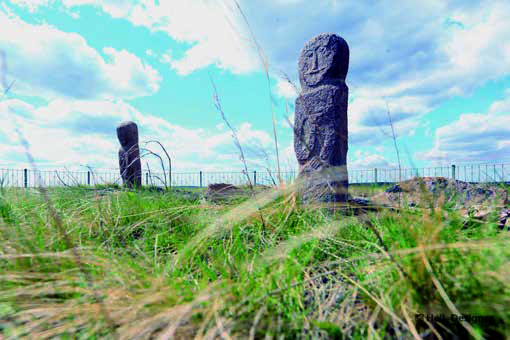
The Kumay Turkic archaeological and ethnographic complex was discovered during the course of archaeological exploration in 2009 by A.M. Dosymbaeva. The monument covers an area within a radius of up to 6 km. The complex consists of several groups of objects belonging to different historical eras. Early monuments dating from the Bronze Age are represented by structures in the form of stone fences. The diameter of the fence varies from 3 to 12 m. The funeral structures of the Bronze Age are located along the bed of the Kumay River. The funeral and memorial objects of the early Iron Age have a round-oval shape with a diameter of up to 15 m and a height of 0.5 m. The complex also has barrows with a "mustache". The Turkic cultural layer is represented by ritual fences with stone sculptures. The preservation of the monuments of the complex is satisfactory. On some objects signs of anthropogenic impact are traced.
The Turkic archaeological and ethnographic complex Kumay is a special place for the concentration of unique monuments within Saryarka. The large number of monuments in this area is primarily associated with natural and geographical conditions. Here you can trace the signs of human habitation from ancient times to the late Middle Ages.The fact that the place has been especially revered for a long time is evidenced by more than a hundred burial structures concentrated in four groups. According to the worldview of the population of the Bronze Age, the location of the burial ground played the role of a sacred place.
The religious representations of the Bronze Age tribes found a logical continuation in the subsequent time. The population of Saryarka at a later time used the territory of the complex for the rituals of burial and commemoration. Vivid evidence are barrows with a “mustache” and Turkic memorial walls. The main features of the cult-ritual complexes of the Turkic period are the presence of stone sculptures, created in honor of the Turkic social and military elite, who protected the lands of Saryarka.In Turkic time, the area where the Kumay complex is located was of high sacral significance. This is evidenced by several large cult-ritual complexes located in a small area. According to researchers, the ancient Turkic sculptures served as images of specific warriors and respected, wealthy, noble Turks. The Kumay ritual complexes demonstrate continuous communication, the development of the cult of the warrior, military glory, the heroic ancestor for several millennia, reverence for the deity of war, the origins of steppe knighthood.
Currently, the complex is a place of pilgrimage and tourism.
Sources
Досымбаева А., Нускабай А. Тюркский археолого-этнографический комплекс Кумай. – Астана: Назарбаев центр, 2012. – 146 с.
Досымбаева А., Нускабай А., Бондарев М. Тюркский культурный комплекс Кумай. Вопросы изучения и сохранения наследия в ландшафте казахской степи // Маргулановские чтения-2011: матер. Междунар. археол. конф. – Астана: ЕНУ им. Л.Н. Гумилева, 2011.– С. 236–241.