Information
- Location
- Түркістан облысы, Sayram District
- Period
- 501 – 1900
- Type
- City
- Kind
- Archaeological sites
- Authors
- Байтанаев Бауыржан Әбішұлы
Sources
- Қазақстанның киелі орындарының географиясы: Табиғат, археология, этнография және діни сәулет өнері нысандарының тізілімі / Жалпы редакциясын басқарған ҚР ҰҒА академигі Байтанаев Б.Ә. – Алматы: Ә.Х. Марғұлан атындағы Археология институты, 2017. – 1-шығарылым. – 904 б.
Description
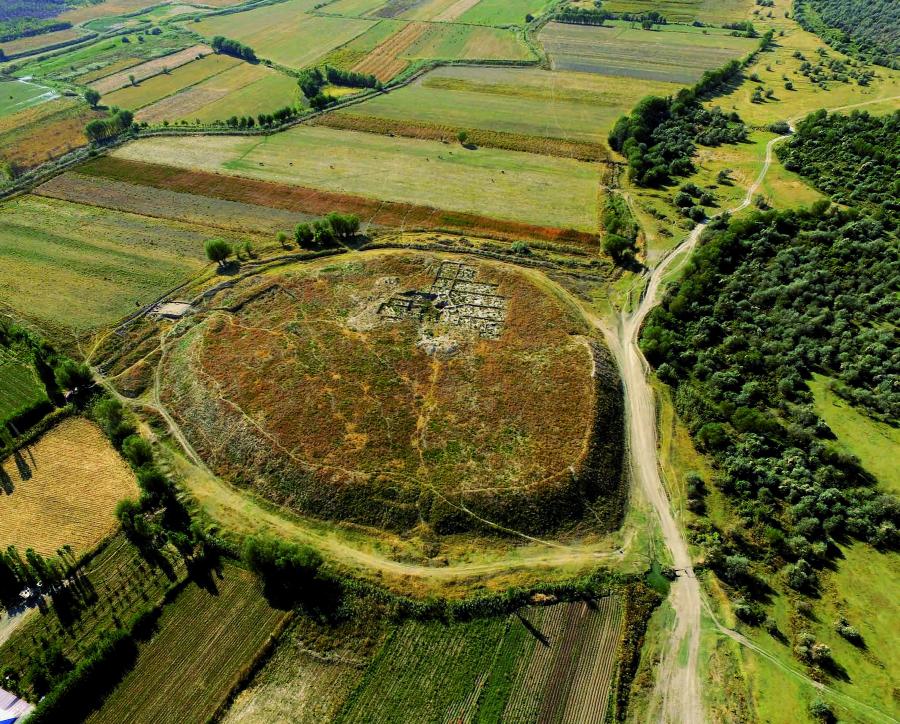
It is located on the northwestern outskirts of the village of the same name Khankorgan (former name of Madani) on the left bank of the Arys river (Sairam district, SKR). It was erected not far from the riverbed on the low floodplain part of the left bank. The hillfort has a rounded oval plan with a gentle entrance from the eastern side.
The monument of archeology has several periods of habitation and chronological lacunae. The early period of functioning of residential structures falls on VI-VIII centuries, the late period - on XVIII-XIX centuries.
The sacral nature of this archeological site is connected with the last period of the hillfort's life in the XVIII-XIX centuries and is well reflected in its name Khankurgan, which is undoubtedly connected with the name of Khan Abylai and his descendant Sultan Syzdyk (Sadyk). In the autobiography of Sultan Sadyk, son of Sultan Kenesary Kasymov, published by E.T. Smirnov, we read: "At present, Sultan Sadyk lives in the Chimkent district, on the Arys River, six versts north of the Svartovsk village of Kara-Bulak, near the ruins of KhanKurgan, once his ancestor, the Kyrgyz Khan Ablai Khan. Sadyk is engaged in cattle breeding and bakery near his wintering, spending his free time reading and praying. This autobiography on behalf of Sultan Sadyk was written by his brother, Sultan Ahmet Kenesarin, who delivered the manuscript to E.T. Smirnov in 1877.
The locals have preserved the legends about the stay of Khan Abylai in Khankorgan and his last days of life to this day.
Khankurgan hillfort is included in the list of historical and cultural monuments of local importance and is under state protection.