Information
- Location
- Almaty District, Aksu District
- Period
- 3300 BCE – 1500
- Type
- Petroglyph
- Kind
- Archaeological sites
Sources
- Қазақстанның киелі орындарының географиясы: Табиғат, археология, этнография және діни сәулет өнері нысандарының тізілімі / Жалпы редакциясын басқарған ҚР ҰҒА академигі Байтанаев Б.Ә. – Алматы: Ә.Х. Марғұлан атындағы Археология институты, 2017. – 1-шығарылым. – 904 б.
Description
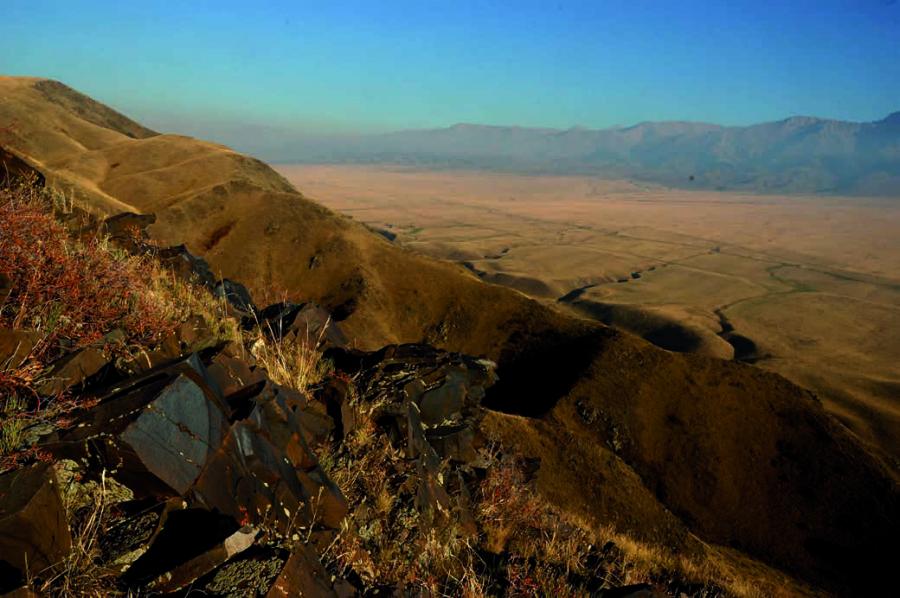
Monument of archeology of the Bronze Age, Early Iron Age, Middle Ages. Petroglyphs are located 15 km away from the village of Kapal (Aksu district, Almaty region). The monument was discovered in the 1980s by the Semirechensk archeological expedition (headed by Akishev K.A.). In 1990- 2000 he was studied by expeditions of the Institute of Archeology named after A.Kh. Margulan under the direction of Z. Samashev, A.N. Maryashev.
The sacral significance of the rock paintings lies in their representation of the religious and mythological views of the ancient peoples of the region from the Bronze Age to the Middle Ages. A number of subjects from the Bronze Age are peculiar and unique, and the iconography of "sunheads" and ordinary anthropomorphs is unusual. Unlike other monuments, the repertoire of ancient Turkic petroglyphs is rich and diverse. More than 2,500 petroglyphs are located on the ridge of the mountain range of its eastern and western extremities. Each of the groups of drawings is "tied" to the ancient settlements of the districts, and the petroglyphs were small sanctuaries and were associated with the cult and religious practices of the ancient inhabitants of the region.
The oldest drawings date back to the Bronze Age. These include images of "sunheads" and ordinary anthropomorphic characters. There are images of bulls, snakes, solar signs and many anthropomorphic figures. People are depicted in ritual poses with their hands raised or sideways placed or with their fingers in their hands. Multi-figure compositions associated with the cult of fertility and the rite of sacrifice are noted. The participants of these rituals are often depicted in zoomorphic masks and shown with signs-symbols in the form of a cross, a circle, a wheel in their hands. In the cult plots of the early Iron Age, in addition to zoomorphic images, there are riders on horses. Often the ancient plots of the Bronze Age were renewed and supplemented in the Saka time. The figures of Saka deer, goats and wild boars are distinguished. They are directly connected with the remnants of totemistic beliefs, which existed in the religion of Saka-Usun tribes of Kazakhstan.
Medieval Turkic images of the Bayanzhurek sanctuary represent pedestrian archers, scenes of a duel between pedestrian and equestrian warriors with spears in high hats, connected with the cult of warriors-heroes. There is an image of a yurt. The cult of a horse is pronounced in petroglyphs of the ancient Turkic time. In the drawings of animals ears, tails are clearly marked, the path between one of the front or back legs is visible. Their images are accompanied by ritual signs and symbols. Petroglyphs of the ancient Turkic time occupy the second place after the drawings of the Bronze Age.
The object is visited, included in tourist routes.