Information
- Location
- Маңғыстау облысы, Munaily District
- Period
- 400 BCE – 101 BCE
- Type
- Temple
- Kind
- Archaeological sites
- Authors
- Астафьев Андрей Евгеньевич, Ақан Онғар
Sources
- Қазақстанның киелі орындарының географиясы: Табиғат, археология, этнография және діни сәулет өнері нысандарының тізілімі / Жалпы редакциясын басқарған ҚР ҰҒА академигі Байтанаев Б.Ә. – Алматы: Ә.Х. Марғұлан атындағы Археология институты, 2017. – 1-шығарылым. – 904 б.
Description
The monument is located 3 km to the north of the new buildings in the regional center of Aktau, on the ridge, which prevails over the surrounding area in height.
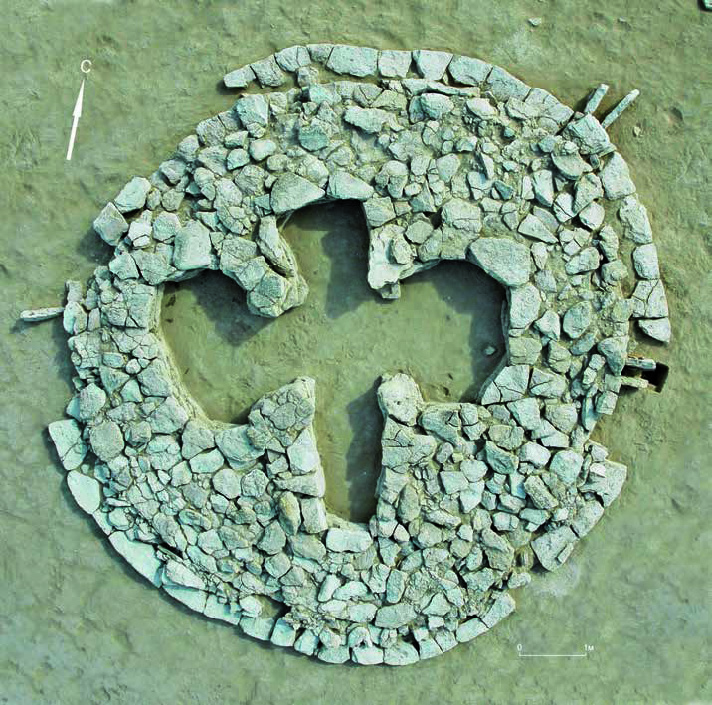
The sanctuary is a stone cult construction of medium size rounded in plan. The initial diameter is 9.2×9.6 m. The outer walls of the foundation are composed of medium sized slabs using the horizontal masonry method without mortar. The masonry has been preserved at a height of about 0.5 m.
The internal room has a cross-shaped layout. The interior layout is based on a corridor, which was previously combined with a dromose-type entrance. The corridor is oriented with a long axis along the line of NNE-SSW, 4.8 m long. In the northern part of the corridor it expands slightly. The corridor width is 0.8-1.3 m. The side chambers are separated from the corridor by symmetrical protrusions - "buttresses". The width of the entrance passageways is 1.0 and 1.15 m, the thickness of the protrusions - "buttresses" varies from 0.7 to 0.9 m. The chambers differ slightly in shape and size, but both are close to the oval. The ancient horizon in the cells is strongly disturbed by the holes of rodents, in which fragments of human bones and ceramics are found. In the process of excavation of internal premises, a representative collection of artifacts was obtained, the main mass of which are fragments of earthenware. A total of about 50 vessels were identified. They are various in size (from small to large volume of 3-4 liters), but are of the same type in shape.
The sanctuary is designed to perform rituals associated with the cult of heroic ancestors of individual clans and families, as well as dead rulers or leaders of certain ethnosocial groups. Probably, each sort had the sacred site and a temple. The size of the temple depended on the status and number of the clan.
The monument of archeology of republican importance. Object of tourism.