Information
- Location
- Karaganda Region, Ulytau District
- Period
- 1200 BCE – 1000
- Type
- Petroglyph
- Kind
- Archaeological sites
- Authors
- Байтілеу Дархан Айтжанұлы
Sources
- Қазақстанның киелі орындарының географиясы: Табиғат, археология, этнография және діни сәулет өнері нысандарының тізілімі / Жалпы редакциясын басқарған ҚР ҰҒА академигі Байтанаев Б.Ә. – Алматы: Ә.Х. Марғұлан атындағы Археология институты, 2017. – 1-шығарылым. – 904 б.
Description
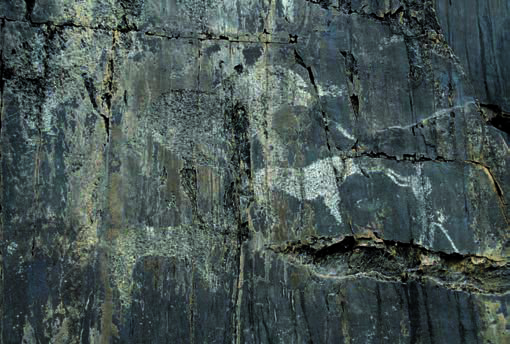
The monument of rock art is located in Ulytau district of Karagandy region. The object is located on both banks and for 25 km along the river Baikonyr. Petroglyphs are found on separate rocky outcrops of metamorphic shale up to 10 m high, separated by rock-free areas. Slabs with rocky images are usually located at a height of 2-4 m, oriented to the south-east less frequently to the north, have vertical or inclined, sometimes horizontal exposure.
The first mention of the Baikonyr petroglyphs is in the work of N.S. Voronets; the article by V.A. Gorodtsov published in 1926 continued the research of this monument. In 1947 the Central Kazakhstan archeological expedition headed by A. Kh. Margulan worked here. From 1983 to 1989 petroglyphs of Baikonyr river valley were studied by archeological expedition of Karagandy State University named after E. Buketov under the direction of V.A. Novozhenov. The complete fixation of all preserved images was carried out.
Four main accumulations of petroglyphs were found: near the village of Baikonyr (location of Baikonyr A-I), near the wintering grounds of Lakbay (location of Baikonyr I-III) and near the winter camp of Sarysay (Baikonyr IV).
The first cluster consists of nine petroglyphs in the winter camp area of Balkimbai, 1.5 km southeast of the village of Baikonyr and downstream of the river. Petroglyphs are spot-punched and less frequently passed through. Rocks with petroglyphs are heavily damaged and covered with lichen. The images of people and animals are mostly single. Men are shown with an accentuated sign of sex; among the animals the images of horses, camels, bulls, saigas prevail. Several palimpsestas have been recorded - the overlapping of ancient figures by younger ones. "Skeletal" and Scythian-Saka animal style images are sharply distinguished.
The greatest interest is the accumulation of petroglyphs in the area of Lakbay winter camp, 18 m to SSE from the village of Baikonyr. Multi-figured "stone canvases" with scenes of hunting of "tailed" and "sun-headed" bull and camel hunters, scenes of erotic nature, scenes of confrontation and struggle of animals, scenes of torment are recorded. On the rocks of Baikonyr III there are images of four- and two-wheeled carriages pulled by camels and horses. The most popular here are images of horses and camels, less often mountain goats, bulls, dogs, snakes and saigas. On plate 16, Baikonyr III, the scene of attack of predators on the bull is fixed, executed in Scythian and Saka animal style, there are also more ancient images of camels, horses, made in a different style and technique.
Rock images of Baikonyr IV are located on the right bank of the river, 25 km south-west of the village of Baikonyr, on two massive, heavily destroyed and covered with lichen rocky outcrops. The main images: horse, camel, mountain goat, riders on horses.
In the petroglyphs of the Baikonyr river valley at least two layers can be distinguished: bronze - late bronze and the early nomadic epoch, and there is a consistent development of the style of images in different chronological periods. Baikonyr's horses have a peculiar, highly realistic design, and their images have analogies in the Seimas Turbine bronzes. Petroglyphs of the Baikonyr river valley are a valuable source of material and spiritual culture of the ancient tribes of Kazakhstan. Probably, they are ancient temples, sanctuaries, sacral place where ancient inhabitants of the region used to worship. Materials of the monument are stored in the Funds of the Museum of Archaeology and Ethnography of Karagandy State University named after E. Buketov.
It is a tourist attraction.