Information
- Location
- Павлодар облысы, Ekibastuz District
- Period
- 3000 BCE – 700 BCE
- Type
- Petroglyph
- Kind
- Archaeological sites
- Authors
- Мерц Виктор Карлович
Sources
- Қазақстанның киелі орындарының географиясы: Табиғат, археология, этнография және діни сәулет өнері нысандарының тізілімі / Жалпы редакциясын басқарған ҚР ҰҒА академигі Байтанаев Б.Ә. – Алматы: Ә.Х. Марғұлан атындағы Археология институты, 2017. – 1-шығарылым. – 904 б.
Description
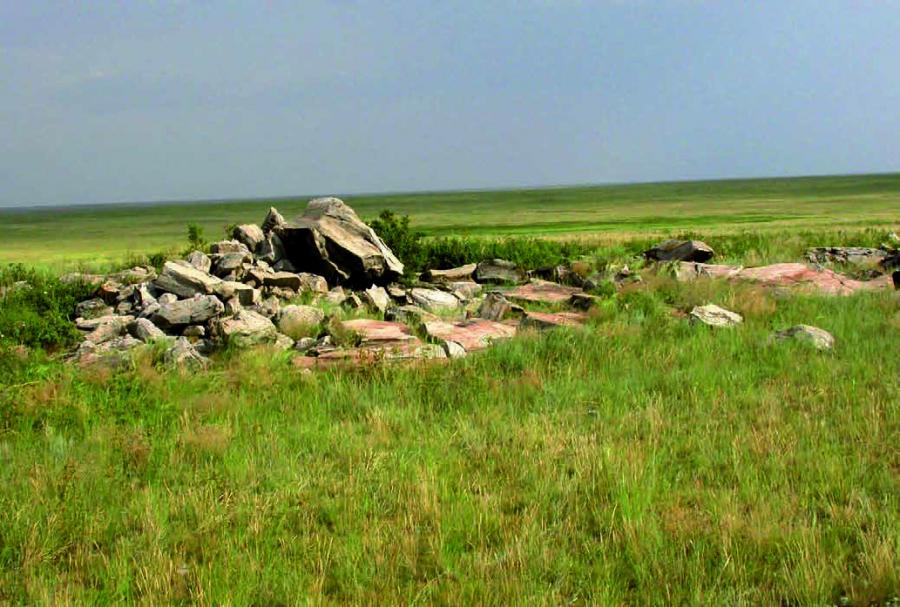
The monument is located 3 km southeast of Maikaiyn station (Ekibastuz district, Pavlodar region). Rock paintings are included in the complex of archeological monuments, including the Paleolithic, Eneolithic, Early Iron Age barrows, timed to the surface of the elongated hill with Paleogene quartzite and sandstone outcrops in the northwestern part of the Akbidaiyk tract. The complex was discovered in 1990 under the leadership of V.K. Merts.
Rock carvings are located on separate blocks with flat iron surface near the eastern slope of the lagoon. They include various compositions with images of people and animals, including an archer, individual anthropomorphic figures; a bull with a pointed face down and big horns protruding forward; large figures of horses, shown with a standing mane walking on a line; A running bull covered with a mountain goat figure; running deer or moose; a separate composition depicting a deer and other drawings, some of which were destroyed as a result of anthropogenic impact, as the monument was in the zone of active economic activity of modern man. However, the obvious sacral significance for the ancient inhabitants of the tract, undoubtedly, gives it special importance for modern culture as one of the unique examples of the spirituality of the ancient population of Northeast Saryarka, which has no analogues.
The sacral nature of the site lies in the fact that it includes, in addition to the multi-temporal archaeological sites, an Eneolithic and Bronze Age cult site with rock paintings, an ancient sanctuary located at the dominant altitude in the area, which provides a good overview of the entire area, including many other archaeological sites, including a settlement of the Bronze Age.
The monument has great scientific and cultural-historical significance as the most vivid complex of primitive art of the Eneolithic and Bronze Age of Northeast Saryarka, connected with the cult practice of the ancient population of the region.