Information
- Location
- West Kazakhstan Region, Borili District
- Period
- 600 BCE – 401 BCE
- Type
- Necropolis
- Kind
- Archaeological sites
Sources
- Қазақстанның киелі орындарының географиясы: Табиғат, археология, этнография және діни сәулет өнері нысандарының тізілімі / Жалпы редакциясын басқарған ҚР ҰҒА академигі Байтанаев Б.Ә. – Алматы: Ә.Х. Марғұлан атындағы Археология институты, 2017. – 1-шығарылым. – 904 б.
Description
Archaeological monument of the VI-V centuries BC. It is located 80 km east of Uralsk, geographically it belongs to the basin of the middle reaches of the Ural River, consists of two groups of the same name - Kyrykoba I, II. In general, there are more than 40 barrows (Burlinsky district, West Kazakhstan region), which gave the name to the monument. According to old-timers, this area was called Kyrykoba by their great-grandfathers, and it has long been revered.
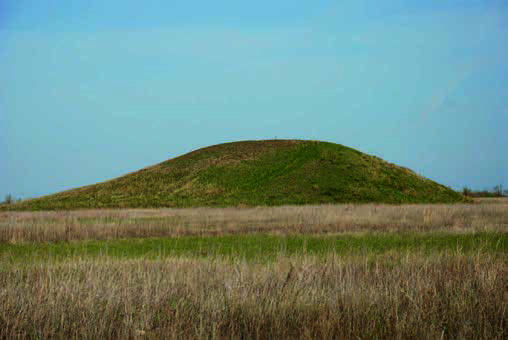
Kurgan group Kyryk Oba-I, located 4 km southeast of Danilyakol village, on the edge of the watershed plateau of the left bank of the Karaoba river (left tributary of the Utva river in the Ural's basin) is one of the most unique monuments of ancient history. It consists of three large barrows, barrows Nos. 1 and 2 are accompanied by long narrow parallel embankments. Paired with the barrows, they form a mirror symmetry (one of them is always smaller than the other), the barrows adjoin the barrows from the south, along the north-south line. They represent a bright the peculiarity of the monument and do not find close analogies among the barrows of Eurasian steppes. All barrows are not only extraordinary tombs of the early Iron Age, but also represent a single burial complex.
The first description of the monument was made in the 1970s by B.F. Zhelezchikov, he noted that the group of Kyryk-Oba is a significant, special monument of striking magnitude and scale. During the construction of these architectural constructions the peculiarities of the landscape were taken into account, the early nomads used the folds of the terrain so that huge barrows in the steppe can be seen only when you come close to them. The height of the largest barrow is 18.6 m and its diameter is 208 m. Its power and size, monumentality on the background of the steppe plain allows you to call it "royal".
The main barrow in 2003 was used for paleo-point research under the direction of V.A. Demkin. It was established that the barrow was covered with light limestone tiles, and a stone "shell" made of thin sandstone slabs covered the entire surface of the barrow. In 2009, research on the stratigraphy of "long embankments" was carried out by R.A. Singatullin, a specialist of the Saratov State University named after N.G. Chernyshevsky, together with A.I. Yudin, R.S. Mergaliev; in 2016, specialists of the West Kazakhstan Center of History and Archaeology D.V. Maryksin and Ya.A. Lukpanova. Finally, it was revealed that they were constructed in three stages, with a small chronological gap, their structure coincides, which indicates in favor of the relative simultaneity of structures.
Kyryk-Oba II group of barrows is located on the left bank of the Ural River, 5 km south of the village of Danilyakol, 5 km north of the large Kyryk-Oba I barrow. This complex with a significant number of barrows is located in the western part of Burlin district, on the border with Terekti district of West Kazakhstan region. The barrows of the complex are located on both sides of the road Uralsk - Burlin highways. It consisted of more than 30 earth barrows, stretched in a chain along the west-east line at a distance of about 5 km. The burial ground is conditionally divided into two parts: the eastern part - Kyryk-Oba-II (A), where there are eight barrows, the largest in the chain of 7 m high, 80 m in diameter, and the western part - Kyryk-Oba-II (B), formed by 21 objects. The largest barrow is 30 m in diameter and up to 2 m high. There are 15 objects excavated at the burial ground.
The first archeological research on the monument was carried out by an expedition led by Zh. Kurmankulov in 2001. The obtained materials and peculiarities of the funeral rite testify to the belonging of the carriers who left the monument to the elitist, dominant social group of early nomads of the region. Further research on the monument in the period 2002-2013 was carried out by expeditions led by S.Y. Gutsalov, A.A. Bisembaev, Z.E. Smailov, E.A. Smagulov, M. Seitkaliev, A. Knutov.
Mounds of barrows rounded in terms of shape. Under the earthen embankment of the barrows were found complex wooden structures of the hipped roof and log house type, based on the ramparts, in the center of which were fixed burial pits. In the funeral rite the use of fire was traced almost everywhere. Here above the graves were erected clay vaults, the walls of which were up to 1 m wide, and there were also recorded clay ramparts around the burial mounds and burials of nasty horses, laid head to the north. The graves are square, rectangular and wide with dromoses, round, bottom graves, and there are also collective burials on the ancient surface.
The accompanying material in the tombs of the Kyryk-Oba burial ground is represented by sets of horse bridle, altars, bronze boilers, weapons, mirrors, and ritual objects. Many of them are made in animal style. Among the images there are images of predatory animals and herbivorous animals. The most common images are images of wolves and birds of prey. The animal style of Kyryk-Oba-II allows to reveal local manifestations of the Scythian-Siberian animal style in this region. Highly artistic samples of ancient art are an archaeological source for the study of issues related to the study of worldview, ideology, level of craftsmanship of the early nomads of the region. All the barrows studied contain information about the complex social and ethnic composition of the tribal union, which was formed in the middle of the I millennium BC, the political core of which were the leaders and their entourage buried in the necropolis. The large number of imported products indicates the involvement in the global processes of the time. According to the definition of K.A. Akishev, tribes of the early Iron Age of Kazakhstan in the middle of the I millennium BC were at the stage of pre-state statehood. Here one can clearly see the presence of three components - South Aral Sea, Massagetian, Scythian Black Sea and local, formed since Savromat time. The Scythian component as the main, unifying, being a catalyst of political processes in Western Kazakhstan and the Southern Urals, was consistently expressed in his works by S.Y. Gutsalov. The grandiosity of the main facilities of the Imperial Eagle is an indicator of a significant concentration of human resources, which was possible with a high level of social organization. In the study of the KyrykOba-II burial mounds, reliable materials were obtained about the complexity of the original funerary structure, built of soil and clay blocks, with the use of wooden floors, column supports, tent elements, etc., the result of the ruining of which was a modern barrow, which represents a large elevation with a flattened top.
Kyryk-Oba is a monument of republican importance, which has no analogues in the region, dates back to the middle of the I millennium BC. The latest burials of the early Iron Age correspond to the period of the 4th-3rd centuries BC. In addition, it is likely that there are later inlet burials from the Middle Ages.
The monument of antiquity, which is Kyryk-Oba, can be considered the main burial site of the early Iron Age of Western Kazakhstan, where the leaders of the large tribal union, which dominated the region, were buried. The object is convenient for visiting, is in the zone of availability, there is an asphalted road nearby. On the basis of the previously received materials the project of the open-air museum-reserve "Steppe pyramid" was developed, where the central point should be the necropolis Kyryk-Oba I with reconstruction of the funeral structure of the main barrow and construction of an exposition pavilion on the territory of the complex.