Information
- Location
- East Kazakhstan Region
- Period
- 0
- Type
- Natural Monument
- Kind
- Sacred objects
- Authors
- Семби Марат Қатайұлы
Sources
- Қазақстанның киелі орындарының географиясы: Табиғат, археология, этнография және діни сәулет өнері нысандарының тізілімі / Жалпы редакциясын басқарған ҚР ҰҒА академигі Байтанаев Б.Ә. – Алматы: Ә.Х. Марғұлан атындағы Археология институты, 2017. – 1-шығарылым. – 904 б.
Description
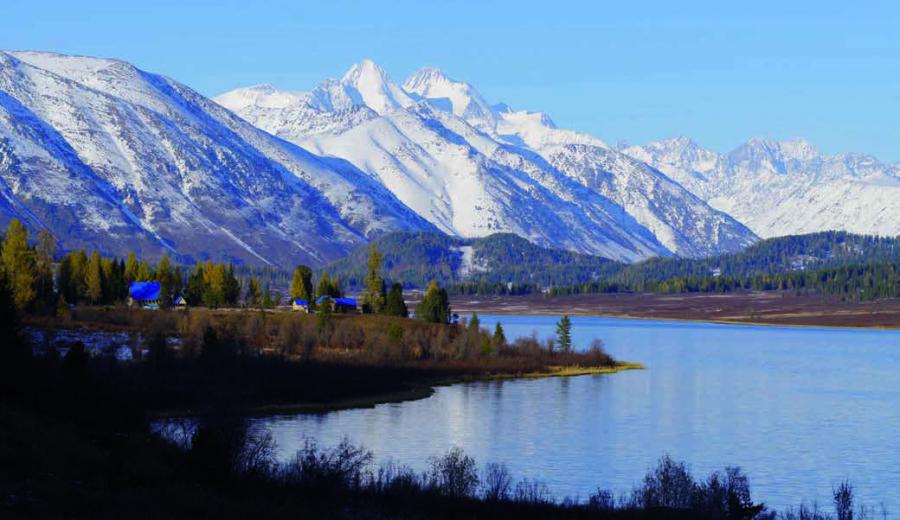
The highest peak of Altai Muztau (Мұзтау) is located on the border of Kazakhstan and Russia in the basin of the Bukhtarma River. Its height is about 4 500 m. "The Russian variant of the name of the mountain Belukha has appeared, probably, in the end of the XVIII century in connection with penetration here of the Old Believers persecuted by the orthodox Russian church", - writes the doctor of geographical sciences A.P.Gorbunov [Quotedfrom: Gorbunov, 2014].
The Altai name of the mountain Muzdu-Tuu (Ice Mountain), as well as the Kazakh name Muztau (Ice Mountain), coincide. It is possible to speak about once full identity of Altai and Kazakh names. The correct Kazakh name of the mountain should be Muzdy-tau, as well as for the Altaians. Another Altai name of the mountain is Kadyn-Bazhy (Woman's peak). It also has the second Russian nickname - Katunskie stolby (Pillars of women).
The Belukha massif is crowned with two wrong snow pyramids. Between pyramids, or horns, the wide lintel stretches. There are also names for Belukha - Ak-Suru (white peak) and Uch-Airy (divided into three). This mountain enjoys special reverence. "You can't even look at it," the old believers said. "Many Altai hunters know the mountain trails to the snowy passes, but at the base of the protected mountains, to which they give a general name to the ijik, their mission ends" [quoted from Sapozhnikov, 1949].
The mountains, which were the subject of sacred worship among the Altai people, were also respected in Kazakh traditional society. Such attitude to the mountains of Kazakhs and Altaians goes deep into our common history, to ancient Turkic times, to the goddess Umai, who had a three-horned headdress. And that's why they were called sacred ijik.
Such a sacred name is given to the Altai mountain Uch-Suru (triple-edged) located in the upper reaches of the Baigol River (Altai).