Information
- Location
- Almaty District, Zhambyl District
- Period
- 3300 BCE – 1400
- Type
- Petroglyph
- Kind
- Archaeological sites
- Authors
- Марьяшев Алексей Николаевич
Sources
- Қазақстанның киелі орындарының географиясы: Табиғат, археология, этнография және діни сәулет өнері нысандарының тізілімі / Жалпы редакциясын басқарған ҚР ҰҒА академигі Байтанаев Б.Ә. – Алматы: Ә.Х. Марғұлан атындағы Археология институты, 2017. – 1-шығарылым. – 904 б.
Description
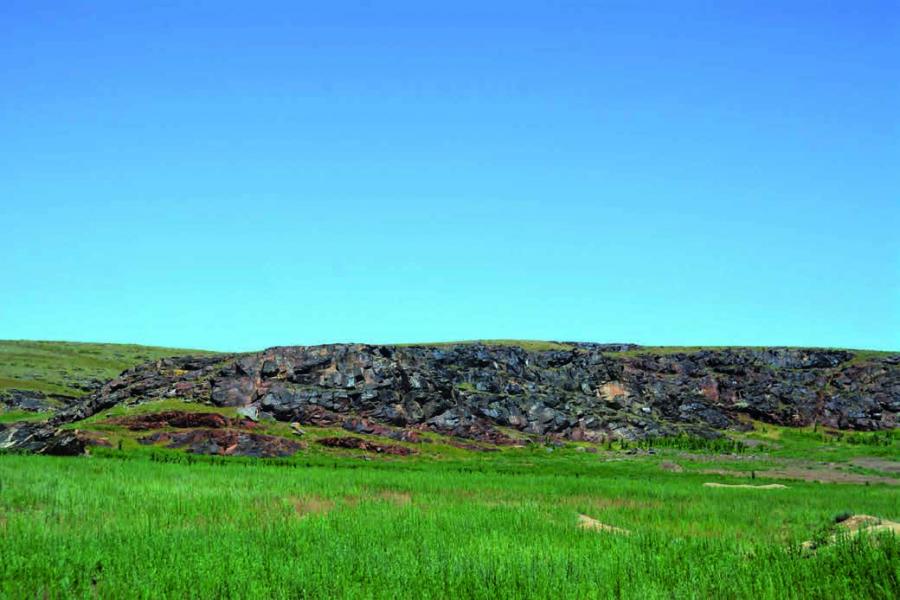
The monument is located in Zhambyl district of Almaty region, on the ridge Kulzhabasy, 15-17 km north of the highway Chiilibastau - Gornyi. Petroglyphs date back to the Bronze Age, early Iron Age and Turkic time. The name of the object was given by the spring with clean water, which is located in the eastern part of the Kulzhabasy mountains. The drawings of Aqqaynar occupy the territory of several tens of kilometers. A large number of ancient settlements and burial grounds of the Bronze Age and Early Iron Age have been recorded here.
None of the monuments of rock art except Tamgaly contains so much information about the worldview and mythological ideas of the population as a cluster of petroglyphs in the tract Aqqaynar, as it is one of the oldest in Zhetysu. The sacred character of the petroglyphs is confirmed by a significant number of cult plots: images of solar characters, wolf and bull, whose cult existed already in the Bronze Age, images depicting phallic cults and fertility. The most significant are the drawings of the bull on whose horns dancing people, hunters in wolf masks, solar characters and other cult scenes are depicted. This indicates that the petroglyphs of Aqqaynar have represented a sacred area for the ancient population of Zhetysu for several millennia.
The monument was unveiled in 2008 by the expedition of the A.Kh. Margulan Institute of Archaeology under the direction of A.N. Maryashev. Most of the petroglyphs were applied in the Bronze Age in the II millennium BC. On the shores of the dried up stream on the rocky outcrops there are rare petroglyphs of large sizes. A significant part of the drawings are figures of tours. They are notable for their thorough knockout and peculiar ornament: dots and stripes on the body of animals. Some figures have horns closed in a ring or an open ring. Sometimes the horns of bulls are visible rings or solar symbols. Among them it is necessary to allocate especially figures of bulls with long horns, sometimes they have an ornament in the form of vertical stripes on the case. One of the images is carved in the upper part of the hard-to-reach rock, has the size of more than 3 m and two pairs of horns.
Unique are the drawings of figures of people with disks on their heads. These are "lunar-headed" or "solar" characters. No less interesting are images of people with wolf masks on their heads. There are a lot of pictures of wild horses, goats, etc. There are few images of camels. Perhaps, in some cases kulans are depicted. According to specialists, among the bones collected in settlements during excavations, the percentage of kulan bones is significant. Many of the figures have been renewed - they differ in color of the patina. Renewals were made at different times.