Information
- Location
- Kyzylorda Region, Kazaly District
- Period
- 1992
- Type
- Mausoleum
- Kind
- Buildings of monumental art
Sources
- Қазақстанның киелі орындарының географиясы: Табиғат, археология, этнография және діни сәулет өнері нысандарының тізілімі / Жалпы редакциясын басқарған ҚР ҰҒА академигі Байтанаев Б.Ә. – Алматы: Ә.Х. Марғұлан атындағы Археология институты, 2017. – 1-шығарылым. – 904 б.
Description
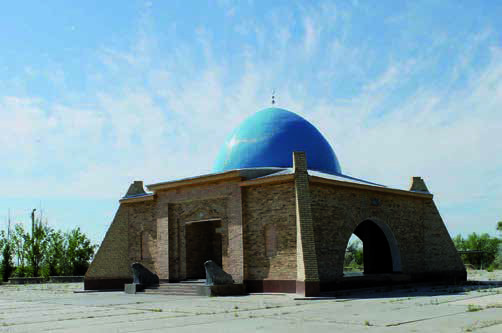
It is located 4 km west of Aiteke Bi (Kazaly district, Kyzylorda region). The mausoleum is erected in memory of the heroic ancestor.
Zhankozha Batyr - one of the prominent figures in Kazakh history, for many years led the national liberation struggle of the Kazakhs against the oppression of the Kokand and Khiva khanates, and then against the colonial policy of the Russian Empire. Zhankozha Batyr Nurmuhammeduly (Nurymbet), a foreman of the Shekty family, was born in 1774 in the village of Arykbulak (Kazaly district). According to oral history, the grandfather of Zhankozha Batyr - Kiyikbai Kulzhamanuly was a Batyr and a Bi under the khan Abylkhaiyr. In 1874, Yelekei Sultan wrote a letter to Zhankozha Batyr, which reads: "When my grandfather Abylkhaiyr was a khan, your grandfather Kiyikbai was a batyr and a bi. The two of them drove away the Karakalpaks migrating along the Syr Darya to Khiva, and the Kalmyks, who seized our lands up to Torgay and Irgiz, to China. Probably our weakness is that we could not return the lands taken from the Kazakhs by Khiva and Kokand khanates. The wife of Kiyikbai Batyr, Tazhi is the daughter of the famous Tama Batyr, Eset. Zhankozha's father, Nurmuhammed (Nurymbet) Batyr, was born of Tazhi, which meant that Yeset Batyr was Zhankozha's maternal grandfather. Tazhi's mother was Bokenbai Batyr's sister from the Tabyn family. Zhankozha's mother is the daughter of the Kopa Batyr of the Karakesek family, a subgenus of Kazantemir. Thus, according to the shezhire (genealogy), Zhankozha Batyr originated from the whole galaxy of Kazakh Batyrs and generals.
A lot of information about the life of the Batyr and his feats of arms for the benefit of his people has been preserved. There are stories about the fact that Zhankozha fought against injustice since his childhood. There is a known case, which occurred in 1789: Kylyshbai khan Zhumagululy (1729-1789), originating from the tribal branch of Shekty - Kuttuk - Kozhamurat and managing clan groups of small shektys from the generation of Alimuly, before going on a campaign, allowed kyanat (to multiply the evil), having made an unfair decision in relation to one orphan child. Zhankozha Batyr, being then at the age of 15, when he heard about this decision, got very angry and, having caught up Kylyshbay khan with his army going on a campaign, struck him with a deadly blow with a fighting axe. Having learned that Kylyshbai khan lies seriously wounded, Nurymbet is going to punish his son Zhankozha. Then Kylyshbai stood up for the boy and, accusing himself of what had happened, did not let Zhankozha be executed, after which he died.
The following information in this row is as follows: in 1791-1792 the Karakalpak bek Tyky Batyr with the intention to return his horses taken away in the barymta suddenly attacked the village of Zhylkaidar Syrlybayuly (1713-1791/92), which originated from the subgenus of Zhakaiym-karabura, and killed him. In response, Kazakh Batyrs in the Syr Darya region retaliate against the Karakalpaks. During this campaign, a young Batyr Zhankozha killed Tyky Batyr in a fight.
According to some reports, in the last years of his life Zhankozha settled down with his family in a secluded place near the Aral Sea, where he died in 1860 at the hands of his enemies. A significant number of works are devoted to the life of the Batyr. A lot of information about Zhankozha Batyr has been preserved in the works of folk art. For example, the heroism of Zhankozha Batyr is praised by such poets as Toremurat, Musabai, Zh. Aibarbekuly, N. Zhubatuly, K. Sultanuly, N. Baltabekuly. In such works as "The History of Zhankozha" by B. Mendibayev, "Zhankozha Batyr and Babazhan Sart" by Zh. Shyngytbayev, "Zhankozha Batyr" by L. Kenzheyev provide more information about the life and heroic service of Zhankozha to the people. Among those mentioned, it is worth mentioning Musabai akyn's work "Zhankozha Batyr", where he tells not only about the liberation movement against the encroachments of Khiva and Russian authorities, headed by Zhankozha Batyr, but also describes the life and lifestyle of Kazakh crop growers, who lived in the years 1840-1860 in the lower delta of the Syr Darya. According to modern researches, the number of epics about Zhankozha Nurmuhammeduly created by national akyns, is more than ten. These epics describe the following events that took place in the life of the protagonist: Zhankozha Batyr's fight with Karakalpak Batyr Tyky at the age of 17, murder in a fight of Turkmen sardar (general) Ayimbet (Aymukhammed), campaign against Russian Cossack detachments, participation in joint military actions with Kenesary khan against the Kokand fortresses Sozak, Sauran, Koskorgan and the tragic death of Zhankozha Batyr at the hands of Sultan Yelekei.
The real burial place of the Batyr is located far from the district center - 170 km from the village of Kaukei (Kazaly district). In 1969, the descendants of Batyr erected mazars over the grave. Hundreds of people took part in the construction of the mausoleum. Thousands of people came to the construction site, organized clean-ups and provided financial assistance. Names of all participants of construction are brought in the book of history of creation of a mausoleum (the book is stored in fund of a memorial museum of G.Muratbayev). A symbolic "handful of land" was brought to the mausoleum from the place of burial of a batyr located in Kyzylkum desert. A memorial repast was made in which guests from all over the republic took part. The foundation of the mausoleum is square in plan with the length of sides of 11.5 m is built of concrete blocks, walls are erected of burnt brick. The height of the building is 8 m. The total area of the mausoleum is 127 m2.
The architectural monument erected in honor of Zhankozha Batyr is considered to be a special place of veneration, as its image has been preserved in the historical memory of the people as an example of incredible bravery, great love and care for his fellow countrymen and native land.
At present, the mausoleum of Zhankozha Batyr is included in the list of preliminary registration of historical and cultural heritage monuments.