Information
- Location
- North Kazakhstan Region, Aiyrtau District
- Period
- 4000 BCE – 2000 BCE
- Category
- Historical and cultural monuments of republican significance
- Type
- Settlement
- Kind
- Archaeological sites
- Protected zone
- ✓
- Authors
- Касеналин Айбар Ерланович
Sources
- Қазақстанның киелі орындарының географиясы: Табиғат, археология, этнография және діни сәулет өнері нысандарының тізілімі / Жалпы редакциясын басқарған ҚР ҰҒА академигі Байтанаев Б.Ә. – Алматы: Ә.Х. Марғұлан атындағы Археология институты, 2017. – 1-шығарылым. – 904 б.
Description
IV-III millennia BC. The settlement is located on the right bank of the Iman-Burluk River, 1.5 km southeast of the village of Nikolskoye (Aiyrtau district, North Kazakhstan region).
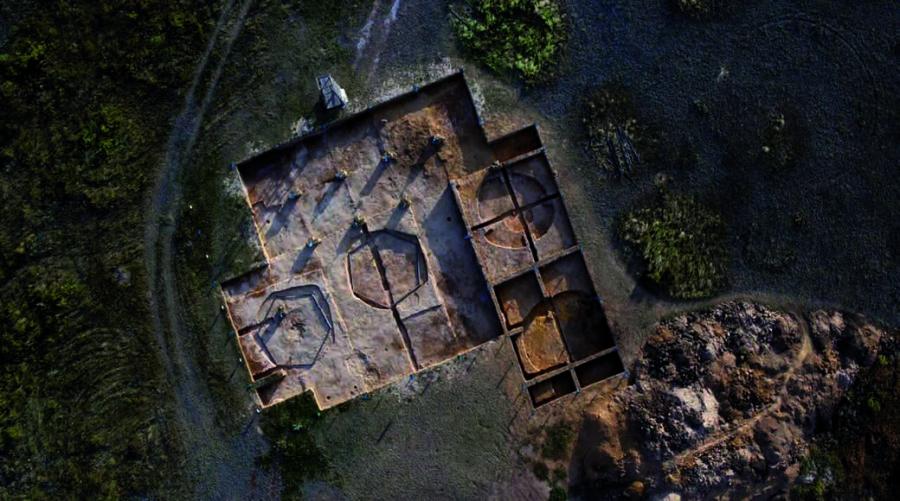
The settlement was opened in 1980 by V.F. Zaibert. The territory of the monument, located on a flat ground, occupies 15 hectares. In total, 109 depressions of foundation pits are fixed at the settlement. During the period of archeological research more than 7500 m2 of the cultural layer was discovered and 76 residential and household structures were excavated. The monument had at least 200-300 dwellings at the time of its functioning. As a result of excavations the planning and design features of the dwellings were revealed. They and other structures of the settlement were closely adjacent to each other. In the central part of the dwelling there was a main hearth. In the walls of the excavation there were numerous niches for household needs. On the basis of these data, the dwellings of the population of the Botai settlement were reconstructed experimentally.
The discovery and study of the settlement of Botai served as the basis for the identification of the Eneolithic archaeological culture of the same name in the Ural-Irtysh interfluve. At present, settlements such as Balandino, Vasilkovka, Kenotkel, Krasnyi Yar, Roshchinskoye, etc. have been identified.
The most numerous is the archeozoological collection, numbering about 150 thousand bones belonging to the horse. Studies of bone material and teeth carried out by domestic and foreign specialists suggest that the horses were first used by the Botanians. The use of a rod for horseback riding made of organic materials has been proved experimentally. In addition, the Botanians used the horse not only as transport, but also as food. The use of mare's milk by the Botaians was scientifically substantiated by the UK ceramic vessel analysis. According to scientific facts, the settlement of Botai can be attributed to the homeland of wild horses domination, and the time of appearance and distribution of the traditional Kazakh drink - kumyss - can be considered IV-III millennia BC.
Horse breeding was the basis of multi-industry complex economy of the Botanians. Numerous finds of tools related to woodworking and housing construction, thousands of fragments of ceramics, complete the information on industrial and economic activities of the population. Types of dwellings and a principle of the organization of settlements are revealed.
The sacral significance of the monument, the name of which is associated with such an important event for man as domestication of a horse in the IV century, is great. Since then, as V.F. Zaibert believes, "humanity has passed from hiking to horseback riding after several million years of evolution. This moment was the beginning of steppe civilization".
Since 1982, the site has been a monument of archeology of national importance. Nowadays it is actively visited.