Information
- Location
- Түркістан облысы, Kazygurt District
- Period
- 1401 – 1900
- Category
- Historical and cultural monuments of republican significance
- Type
- Mausoleum
- Kind
- Buildings of monumental art
- Authors
- Ёлгин Юрий Андреевич
Sources
- Қазақстанның киелі орындарының географиясы: Табиғат, археология, этнография және діни сәулет өнері нысандарының тізілімі / Жалпы редакциясын басқарған ҚР ҰҒА академигі Байтанаев Б.Ә. – Алматы: Ә.Х. Марғұлан атындағы Археология институты, 2017. – 1-шығарылым. – 904 б.
Description
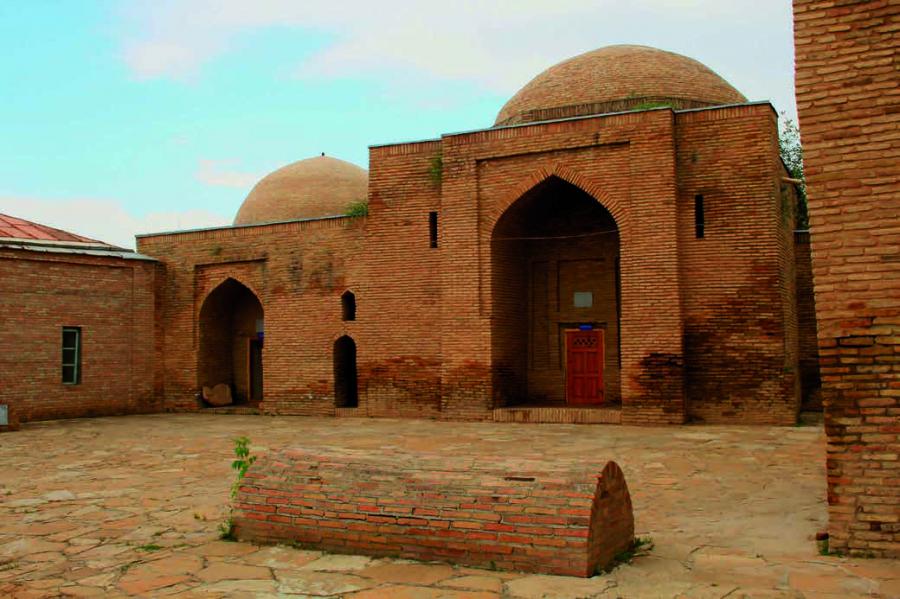
The second most important mausoleum in the sacral complex of Turbat is the mausoleum of Koshkar ata, which is maintained in canonical forms of Islamic architecture, also testifies to the reverence of saints associated with totemistic ideas. In addition, the features of the totem patron saint of shepherds-pastoralists in later legends are transferred to Ismail ata, a prominent Sufi figure, a follower of Khoja Ahmed Yasawi and a representative of the Hanafi branch in South Kazakhstan agiology. Carrying in itself echoes of worship of mountain natural objects in the vicinity of Turbat, this name in the broad sense of the word at the mediated level goes back to the tribal divisions of the Turks.
It is located between the mosque and the chillakhana on the western side of the yard. A portal-dome two-chamber mausoleum. The main volume of the mausoleum is adjoined by a lower burial place from the west. A square one in terms of the main hall without gravestones can be perceived as a ziaratkhana, and less as a gurkhana (kabyrkhana). It is composed of burnt square bricks on lime-ganche mortar. It is covered with a spherical-conical dome. A characteristic feature - the transition to the dome is carried out with the help of sails in the form of tandem bricks protruding above each other (looks anachronistic). The decor is missing.
Architectural monument of republican importance. Since 1982 it has been protected by the state. The object of pilgrimage and religious tourism.