Information
- Location
- Түркістан облысы, Saryagash District
- Period
- 2005
- Type
- Сomplex
- Kind
- Buildings of monumental art
- Authors
- Тоқтабай Ахмет Уалханұлы
Sources
- Қазақстанның киелі орындарының географиясы: Табиғат, археология, этнография және діни сәулет өнері нысандарының тізілімі / Жалпы редакциясын басқарған ҚР ҰҒА академигі Байтанаев Б.Ә. – Алматы: Ә.Х. Марғұлан атындағы Археология институты, 2017. – 1-шығарылым. – 904 б.
Description
Kambar ata is one of the Kazakh saint patrons of the pre-Islamic period, the patron saint of horses, it is briefly denoted by the word "Grandfather horseherd - Kambar ata". Kambar Ata was not only a patron saint of horses. In the ancient Kazakh folklore there is a prayerful melody: "Lord of the roads Kambar-au! Lord of the land(s) Kambar-au! Lord of the deserts Kambar-au! Lord of the waters Kambar-au! Fulfill my desire! In this we see a reflection of the Kazakh phenomenon, which consists in the fact that our early ancestors, covering thousands of spaces with the horse, subjugated various land and desert lands. There are legends where Kambar is presented as a cultural hero who invented the recipe for making koumiss.
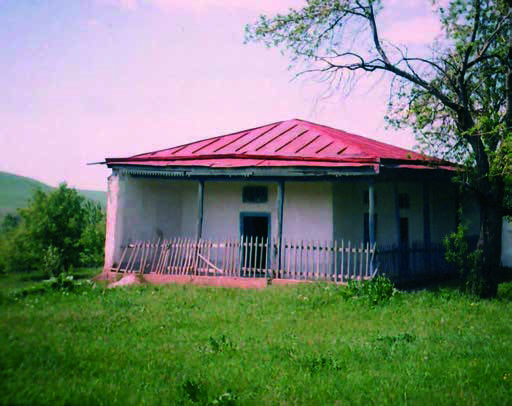
Pilgrims come to the Kambar Ata Mosque. When people have a disease or illness, sleep over at the Kambar Ata Mosque, tie pieces of cloth to his tree, and the sick cattle are driven around the Kambar Ata tree three times. According to a local legend, long ago this tree was a pillar to which the main stallion was tied, but once there was a terrible mudflow that carried the rich man's horses away. In this area, the stones look like horse heads. According to legend, they are the heads of that rich man's stallions. The Kambar Ata complex is still a sacred place where pilgrims read prayers.
The complex consists of three parts. In the village there is the mosque of Kambar ata. On the slope of the mountain grows a tree called the "sacred tree of Kambar-ata". Upstream of the village there is a large black stone on the bank, shaped like a horse's head and two smaller ones resembling foals' heads. The big stone is called the "head of Kambar ata" and the small stones are called the "heads of his foals".