Information
- Location
- Karaganda Region
- Period
- 1801 – 1900
- Type
- Mausoleum
- Kind
- Buildings of monumental art
Sources
- Қазақстанның киелі орындарының географиясы: Табиғат, археология, этнография және діни сәулет өнері нысандарының тізілімі / Жалпы редакциясын басқарған ҚР ҰҒА академигі Байтанаев Б.Ә. – Алматы: Ә.Х. Марғұлан атындағы Археология институты, 2017. – 1-шығарылым. – 904 б.
Description
It is located on the left bank of the Sarybulak river in 45 km to the south-west from Kiyik station (Karagandy region).
Shubyrtpaly Agybay (1802-1885) - one of the participants of the national liberation uprising led by the last Kazakh khan Kenesary Kasymov against the colonial policy of the Russian Empire in 1837-1841. Agybay Batyr rose to the rank of chief military leader among the soldiers of Kenesary. In the battles with the tsarist troops he skillfully used rational methods of combat, so he always won. For this he received the name Akzholtai Agybay. He was also called Shubyrtpaly Agybay by the people. His courage, bravery, valor, and military success earned him that the soldiers turned his name into a battle cry. In the period of 1826-1849 warriors under the leadership of Agybay Batyr repeatedly emerged as winners in battles against regular Russian troops stationed in the military fortifications in Kazakhstan, such as Karkaraly, Aktau, Akmola and others. Also battles were conducted along the rivers Irgiz, Tobol, in the cities of Kokshetau, Kyzylzhar, which often ended in the victory of Kazakh warriors. Up to 1849 he continued to attack the fortresses of the tsarist government.
In addition to direct involvement in Kenesary Kasymov's fighting, Agybay Batyr had another important duty, namely, to provide the rebels with the best horses. Agybay went to Bukhara, Khiva, several times in search of horses, addressed to the Kazakhs of the Junior Zhuz. This mission he performed by buying horses and sometimes resorted to barymta. These deeds of Agybay were reflected in the work of akyn Shortanbay - a poet of the XIX century. The content of the work of the famous poet is as follows. Despite his respectable age, Agybay was looking for good horses on behalf of Kenesary, because the sultan did not want to put his valiant warriors on bad horses. Batyr was looking for them day and night in different lands.
In 1885, when Agybay Batyr died, the king's administration, taking into account his authority among the Kazakh people, allowed to bury his body in the mausoleum of Khoja Ahmed Yasawi. Batyr is buried in the floodplain of the Bosaga River in the area of Tayatkan-Shunak in Saryarka, where he was in the last days of his life. The way of life of Kenesary Kasymov's main batyr, Agybay, is the subject of the creative work of historians and literary figures.
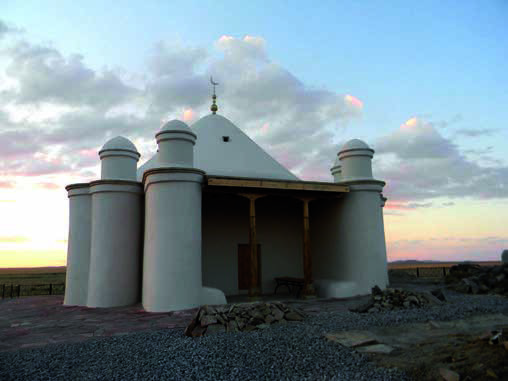
Agybay Batyr Mausoleum is a monument preserved since the XIX century. It was built in the 1880s. It is a building with a dome, which has a square shape. Its dimensions are 8.80×8.58 m. Inside the mausoleum 12 people are buried. The body of Agybay Batyr lies second in the northwest corner.
Mausoleum of Agybay Batyr is in good condition. It is the object of local importance and the point of pilgrimage, where people come to receive a blessing.