Study of Dzungarian Alatau petroglyphs
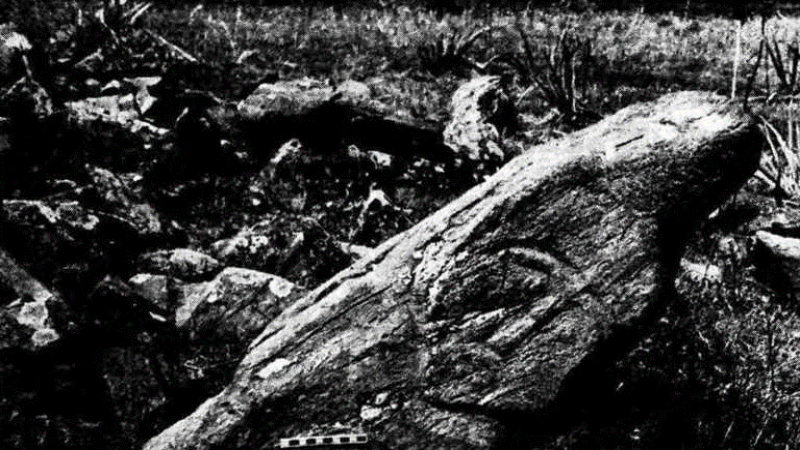
A detachment of the Semirechensk expedition of the Institute of History, Archeology and Ethnography of the Academy of Sciences of the Kazakh SSR continued to study the Dzhungar Alatau (Sarkand region, Taldy-Kurgan region) petroglyphs. Petroglyphs, probably related to the Eneolithic and Early Bronze Ages, were found in the Chimbulak area. They are carved into the gray shales that cover the slopes of the mountains at the edge of the canyon of the Kopal River. There are numerous (several hundred figures) images on the rocks of the top of Zhylandy, which make up the design of a majestic sanctuary in the open air and, corresponding to three natural terraces, are divided into three groups. The organizing centers here are four large compositions carved on the southern slope's horizontal and slightly inclined slabs. These are scenes of 12 archers hunting a giant griffin and beating horses with round maces, a composition with a solar deity, a chariot and “guardians of the cardinal points”, an image of a snake braiding a herd of horses and kulans. In the interpretation of the figures, a strong geometrization is noticeable, which brings them closer to the images of Saimalytash. In addition, petroglyphs were found in the tracts of Kyzyl (height 3500 m), Zhanbas and Aulietuma. Among them, motifs of a rider on a deer, a chariot, a deer, an elk, belonging to the period from the Bronze Age to the Turkic time, stand out, and some engravings are quite well-dated by analogies with other categories of archaeological sites.
Sources
- Archaeological discoveries of 1981. М.: 1983. 517 p.