Research on Otrar and Kuyruktobe
The Otrar-Kuyruk detachment of the Institute of History, Archeology and Ethnography of the Academy of Sciences of the Kazakh SSR continued to work on the Otrar, where the remains of a bathhouse of the 11th-12th centuries were excavated. A cistern for hot water was cleared - a square tank with dimensions of 2.5x2.5 m and a height of 1 m. Its walls and bottom are made of burnt bricks coated with several layers of waterproof kir (alabaster) up to 5-7 cm thick the help of a boiler smeared into the bottom of the cistern, which heated up with streams of heat and hot smoke flowing around it from the side of the furnace.
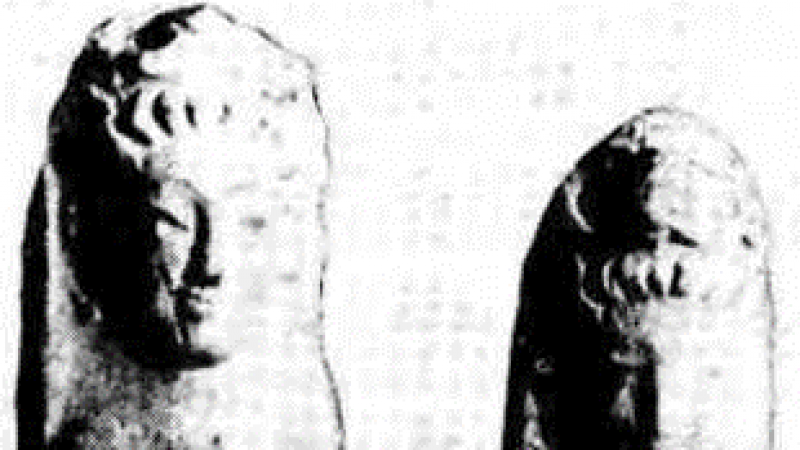
On Kuyruktobe, the rubble continued to be dismantled in the main hall of the palace complex of the 6th-8th centuries, which had died from a fire. The collapsed roof and upper parts of the walls preserved the wooden structures of the floor and interior: carved ceiling beams with geometric and floral patterns, the remains of supporting columns and blocks (about 1.2x0.4 m), apparently from the ceiling frieze. On one of the blocks there is a composition of human figures. So far, the rubble has been cleared only in two corners of the hall. During clearing, terracotta figurines of a female deity and ceramics of the 6th-8th centuries were found.
In shakhristan, two city blocks of the 11th century were excavated. The houses are two-room and continue in their layout and interior the traditions of dwellings of an earlier time. In residential areas up to 40 sq. m there were g - and p-shaped sufas 1.5-1.8 m wide and up to 0.35-0.40 m high and hearths in the center. There are two types of hearths: subrectangular platforms with sides or round ceramic braziers with a diameter of up to 0.8 m embedded in the floor. 11x the walls from the inside and part of the bottom are decorated with carved and stamped ornaments. There were tandoors on pedestals, utility zones separated by low walls, and baking bread and clay bins. For the same purposes, the house's usual second small (up to 8 sq. m) room with a series of bins was used.
During the excavations of the quarter, a large amount of ceramics was collected, including glazed ceramics of the 11th century copper dirhams of Varahran V (Gitrifi type), which were in circulation at the end of the 10th - beginning of the 12th centuries. Among other finds, a flute made of tubular bone attracts attention.
Sources
- Archaeological discoveries of 1982. М.: 1984. 528 p.