Research in the Otrar oasis
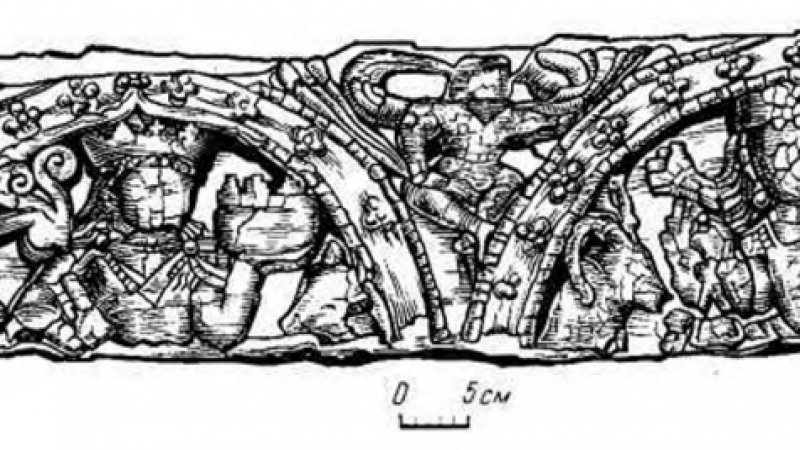
The Otrar-Kuyruk detachment of the Institute of History, Archeology, and Ethnography of the Academy of Sciences of the Kazakh SSR continued to work in the Otrar oasis.
On Kostobe South, excavations were carried out on residential buildings of the 3rd-5th centuries. One-two and three-room houses with sufas along the walls, outdoor hearths and fireplaces have been opened.
On Kuyruktobe, the demolition of the blockage in the main hall of the palace complex of the citadel of the 6th-8th centuries continued. Six charred carved boards from the subceiling frieze, with images of gods and kings, were cleared and conserved at the northeastern wall. The plots of images find analogs in the materials of Sogd.
A house of the 7th-8th century, consisting of two-room sections, where one of the rooms is residential and a pantry, was excavated in the shakhristan of Kuyruktobe. The central room is a hall with about 60 square meters had sufas along the walls, one of which had a stage.
Residential buildings of the 10th-11th centuries were studied. A stalk with an Arabic text made in black ink was found in one of the houses. Handwriting - archaic kufi, time - 9th-10th centuries. The first surah of the Qur'an is written on the shard.
Excavations of pottery workshops on the rabad of Otrar of the 13th-early 15th centuries continue. During the excavations of workshop X, fragments of stamped ceramics, kalyp (casting molds) and their fragments were collected, the upper part of the jug, decorated with repeating figures of a horse and a cheetah, is interesting.
Sources
- Archaeological discoveries of 1984. М.: 1986. 512 с.